
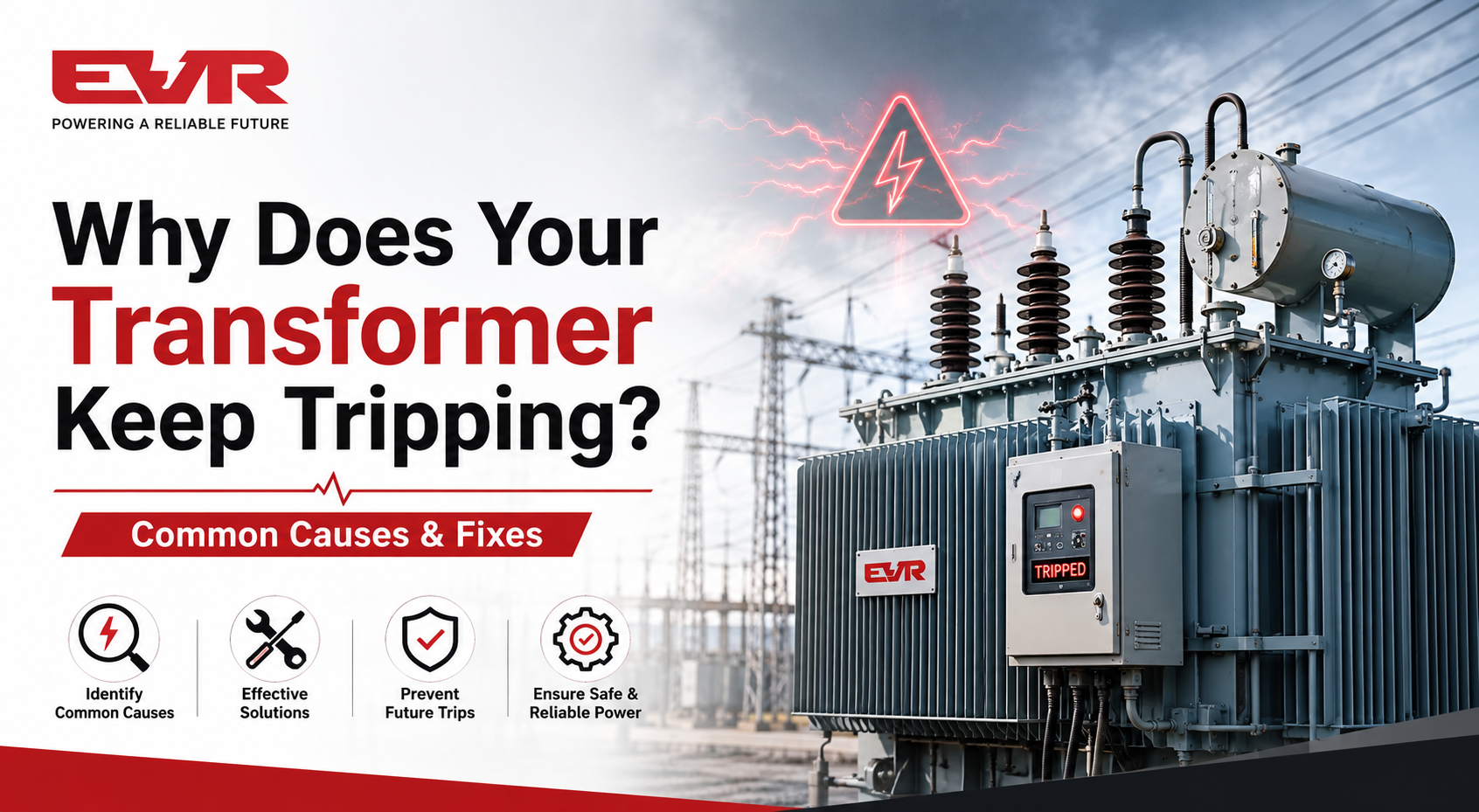
Unexpected transformer shutdowns can interrupt production, damage connected equipment, and increase downtime costs. When transformers trip repeatedly, the issue often points to an underlying electrical or mechanical fault that requires immediate attention. Understanding the main transformer tripping causes helps industries prevent failures.
Many facility managers ask why the transformer trips frequently even after resetting the system. The answer can range from overload conditions and insulation failure to poor maintenance practices and unstable power supply. Identifying the exact reason through proper inspection and testing is essential for safe and reliable performance.
This guide explains the common reasons behind transformer tripping, warning signs to watch for, and practical steps for transformer fault diagnosis and repair.
What Happens When a Transformer Trips?
A transformer trips when its protection system detects an unsafe operating condition. The protection relay disconnects the transformer from the electrical circuit to prevent overheating, fire hazards, or equipment damage.
Tripping is not the actual problem. It is a safety response triggered by another issue inside the transformer or electrical network. Repeated tripping can shorten transformer life and affect connected machinery.
What Are the Most Common Transformer Tripping Causes?
Several electrical and operational problems can trigger transformer shutdowns.
Can Transformer Overload Problems Trigger Frequent Trips?
Yes. One of the leading transformer tripping causes is overloading. When the transformer carries more load than its rated capacity for long periods, the winding temperature rises beyond safe limits.
Common overload situations include:
- Running additional machinery without upgrading transformer capacity
- Sudden load spikes during production cycles
- Poor load balancing across phases
- Seasonal increases in power demand
Persistent transformer overload problems can damage insulation, reduce efficiency, and lead to winding failure.
Could Short Circuits Cause Transformer Trips?
Short circuits create excessive current flow within the transformer or connected electrical system. Protection relays react immediately and isolate the transformer to avoid severe damage.
Short circuits may occur because of:
- Damaged cables
- Loose electrical connections
- Moisture entry
- Internal winding faults
- Faulty switchgear components
If short circuit issues continue, the transformer should undergo professional transformer fault diagnosis to locate the exact problem area.
Does Overheating Lead to Transformer Shutdown?
Heat is one of the biggest threats to transformer health. Overheating may result from overload conditions, blocked cooling systems, or inadequate ventilation.
Signs of overheating include:
- Burning smell near the transformer
- Oil discoloration
- Unusual humming sounds
- High temperature alarm activation
When excessive heat builds up, protective systems trip the transformer to prevent insulation breakdown and fire risks.
Why Transformer Trips Frequently Even After Resetting?
Repeated resetting without identifying the root cause can worsen internal damage. If you are wondering why the transformer trips frequently, the issue may involve hidden electrical faults or aging components.
Could Insulation Failure Be the Reason?
Transformer insulation weakens over time due to heat, moisture, contamination, and voltage stress. Damaged insulation allows leakage currents that trigger protection relays.
Insulation deterioration is common in older transformers or units operating in dusty industrial environments. Regular insulation resistance testing helps identify problems before major failure occurs.
Are Voltage Fluctuations Affecting Transformer Performance?
Unstable voltage supply can create stress on transformer windings and connected equipment. Sudden surges or dips may activate protection systems repeatedly.
Voltage-related problems often come from:
- Grid instability
- Improper generator synchronization
- Poor earthing systems
- Heavy industrial load variations
Power quality analysis is useful for identifying abnormal voltage conditions.
Can Oil Contamination Cause Transformer Faults?
Oil-filled transformers rely on insulating oil for cooling and insulation. Contaminated oil reduces heat dissipation and dielectric strength.
Oil contamination can happen because of:
- Moisture entry
- Oxidation
- Dust accumulation
- Aging oil quality
Routine oil testing helps detect early signs of transformer deterioration.
How to Fix Transformer Tripping Safely?
Proper troubleshooting is important before restarting a transformer. Random resets without inspection may increase the risk of complete transformer failure.
Should You Inspect the Load First?
Yes. Begin by checking whether the transformer is operating beyond its rated load capacity. Load analysis helps identify whether excessive demand is causing repeated trips.
If overload is confirmed, possible solutions include:
- Redistributing electrical loads
- Installing higher-capacity transformers
- Using load management systems
- Reducing peak demand during operations
Addressing transformer overload problems early prevents further damage.
How Important Is Transformer Fault Diagnosis?
Professional transformer fault diagnosis is essential when the cause is not visible externally. Advanced testing methods help detect hidden faults accurately.
Common diagnostic tests include:
- Insulation resistance testing
- Turns ratio testing
- Dissolved gas analysis (DGA)
- Thermal imaging inspection
- Oil quality analysis
These tests help engineers determine the condition of transformer components and recommend suitable repairs.
When Should Components Be Repaired or Replaced?
Some transformer parts wear out naturally with time and operating stress. Damaged bushings, cooling fans, relays, or winding sections may require repair or replacement.
Ignoring faulty components can lead to:
- Unexpected downtime
- Higher maintenance costs
- Damage to connected factory equipment
- Safety risks for workers
A qualified transformer service provider can assess whether repairs or full replacement is the better option.
How Can Preventive Maintenance Reduce Transformer Trips?
Preventive maintenance plays a major role in reducing unexpected transformer shutdowns. Regular inspections help identify developing issues before they become serious.
An effective maintenance plan should include:
- Routine temperature monitoring
- Oil testing and filtration
- Tightening electrical connections
- Cleaning cooling systems
- Checking protection relays
- Load monitoring and balancing
Consistent servicing improves transformer reliability and reduces emergency repair costs.
Why Is Immediate Action Important After Transformer Tripping?
Delaying repairs after repeated tripping can create larger electrical failures across industrial operations. A malfunctioning transformer may affect motors, automation systems, and production equipment connected to the network.
Ignoring transformer faults may result in:
- Production interruptions
- Equipment damage
- Increased energy losses
- Electrical fire hazards
- Reduced transformer lifespan
Quick technical inspection helps prevent costly downtime and improves operational safety.
How Does EVR Power Support Transformer Maintenance and Repairs?
EVR Power provides transformer inspection, fault analysis, maintenance, and repair solutions for industrial applications. Their technical team helps identify the root causes behind repeated transformer shutdowns and recommends suitable corrective measures.
From load analysis and oil testing to complete transformer fault diagnosis, EVR Power supports businesses in maintaining stable and safe transformer performance.
Conclusion
Repeated transformer shutdowns should never be treated as a minor electrical issue. Common transformer tripping causes such as overload conditions, insulation failure, overheating, voltage fluctuations, and oil contamination can lead to serious operational problems if left unresolved.
Understanding why transformer trips frequently helps industries take faster corrective action and avoid expensive equipment failures. Proper maintenance, timely testing, and expert inspection are key to reducing transformer overload problems and improving long-term reliability.
If your facility experiences repeated transformer trips, professional support and accurate transformer fault diagnosis can help identify the issue quickly and restore safe operation.
FAQs
Why does my transformer keep tripping frequently?
Repeated transformer tripping usually indicates overload conditions, overheating, insulation damage, or electrical faults within the system. A professional inspection can identify the exact cause and prevent further damage.
Can overloading cause a transformer to trip?
Yes, operating beyond the transformer’s rated capacity increases heat buildup and activates protective relays. Long-term overload can damage transformer windings and insulation.
How do I know if my transformer is faulty or just overloaded?
Load testing and diagnostic inspections help determine whether the issue comes from excessive electrical demand or internal component failure. Signs like overheating, oil contamination, and insulation weakness often point to transformer faults.
Is transformer tripping dangerous for factory machines?
Yes, repeated tripping can interrupt power supply and affect connected machinery performance. Sudden shutdowns may also damage sensitive industrial equipment and increase production downtime.
Can EVR Power diagnose and repair a frequently tripping transformer?
Yes, EVR Power offers transformer inspection, testing, maintenance, and repair services for industrial systems. Their team can identify fault conditions and recommend suitable repair solutions.
0 Comments