
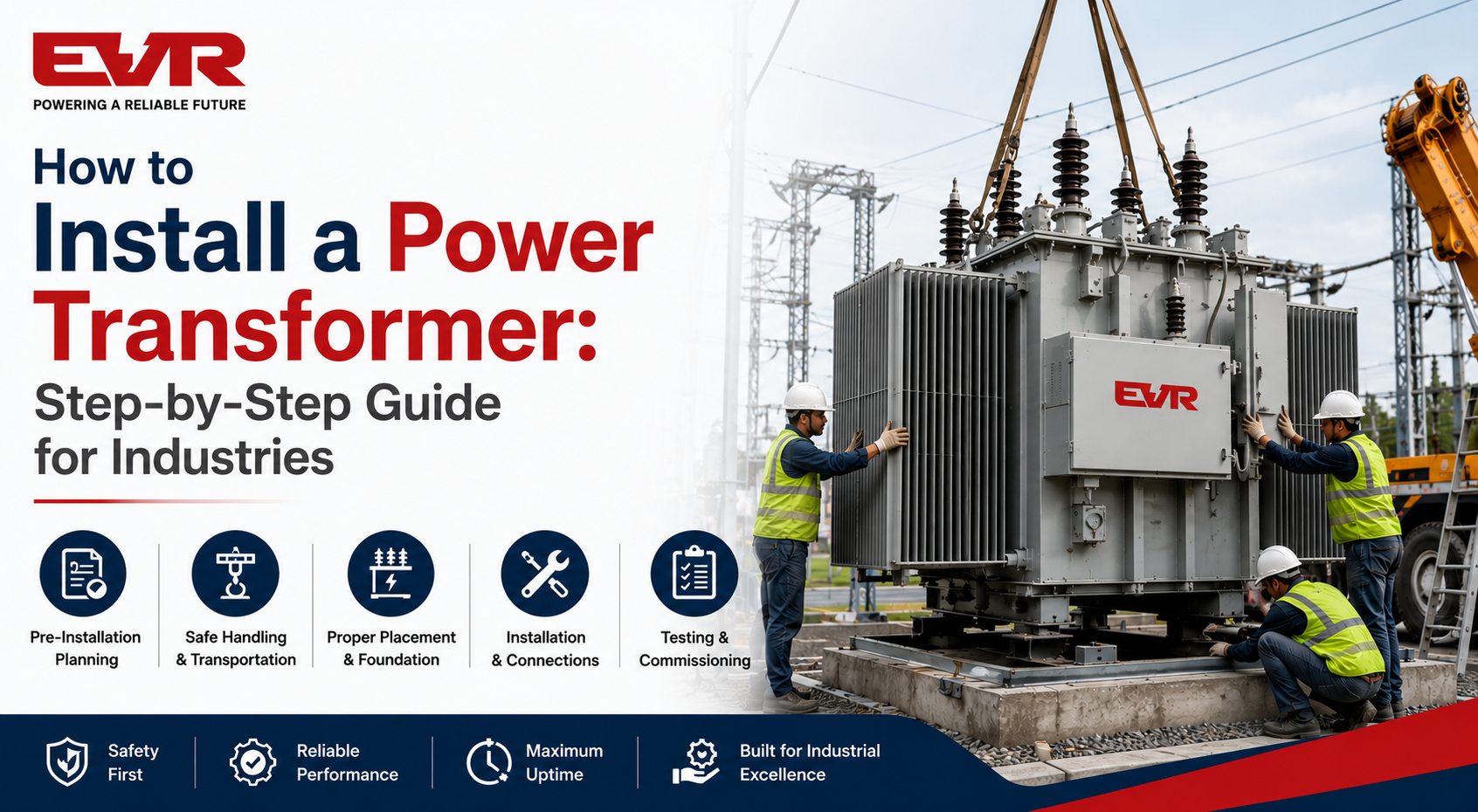
A power transformer installation done without proper planning is one of the more avoidable causes of early equipment failure.Following a clear power transformer installation guide India industrial teams can rely on reducing that risk considerably. The transformer itself may be correctly specified and well built, but poor siting, inadequate earthing, or skipped pre-commissioning tests will shorten its service life or cause it to fail on energisation.
Before beginning any installation project, it is also worth understanding the Latest Innovations in Power Transformer technology, as modern transformers now incorporate advanced monitoring systems, improved insulation materials, and energy-efficient designs that simplify installation and enhance long-term reliability.
This guide covers the stages industrial teams follow, from site preparation through to energisation, with the safety and testing checks that apply at each stage.
Steps to Safely Install a Power Transformer
A safe installation follows six stages in order:
- Site preparation and foundation work
- Delivery and positioning
- Electrical connections and cable terminations
- Grounding and earthing
- Pre-energisation testing
- Energisation and commissioning checks
Each stage is covered below.
Site Preparation Before Transformer Delivery
The foundation must be level, load-rated for the transformer’s full weight including oil if applicable, and allow the required clearances on all sides. In India, industrial transformer installations are governed by Central Electricity Authority regulations and local inspectorate requirements, which vary by voltage class and site type.
For indoor dry type installations, ventilation needs separate planning. Cast resin and VPI transformers cool by air circulation, so the room must allow sufficient airflow, and forced ventilation may be required depending on the transformer’s rating and site temperature.
How Much Space Is Required Around a Transformer During Installation?
Understanding how to install industrial transformer units correctly starts with clearance planning. Requirements vary by three factors:
- Voltage class : higher voltage ratings require greater separation from walls and adjacent equipment
- Transformer type : oil-filled outdoor units follow fire safety clearance rules; indoor dry type units require space for ventilation and maintenance access
- Installation setting : indoor and outdoor installations are governed by different standards
The correct figures come from the transformer manufacturer’s installation manual and must be confirmed against local inspectorate requirements before the foundation is cast.
What Grounding and Earthing Is Needed for an Industrial Transformer?
Transformer grounding and earthing India industrial installations require two distinct circuits: the equipment earth and the neutral earth.
The equipment earth connects the transformer tank, frame, and enclosure to the site earth grid. This must be a low-impedance connection so that a fault on the transformer body causes the protective device to operate quickly rather than leaving the metalwork live.
The neutral earth connects the secondary winding neutral point to the earth grid. The impedance of this connection determines how the system behaves during earth faults downstream, and it must be sized to match the protective relay settings for the installation.
Both connections should be tested with an earth resistance meter before energisation, and the readings retained as part of the installation record.
What Tests Should Be Done Before Energising a New Transformer?
A transformer commissioning checklist for a new industrial installation covers several tests before the unit is connected to supply. The purpose is to confirm the transformer is undamaged, correctly connected, and safe to energise.
Standard pre-energisation checks include:
- Insulation resistance test on each winding to earth and between windings
- Turns ratio test to verify the winding ratio matches the nameplate
- Vector group confirmation to ensure the phase relationship is correct
- Oil dielectric strength test for oil-filled units, confirming the oil has not absorbed moisture in transit or storage
- Buchholz relay and temperature relay functional checks for oil-filled units
- Visual inspection of all terminations, bushing condition, and tap changer position
These tests should be carried out by a qualified electrical engineer and the results recorded before energisation. If any reading falls outside the acceptable range, the cause must be identified and resolved before the transformer is connected to supply.
Power Transformer Installation Guide India: EVR Power Support
EVR Power provides installation, testing, commissioning, and repair services for power and distribution transformers across India. The team carries out on-site inspection of transformers, provides commissioning support, and supplies spare parts for all makes and brands including imported units.
With over 25 years of manufacturing experience, ISO 9001:2015 certification, and a 24/7 support team, EVR Power assists industrial buyers from specification through to energisation and ongoing maintenance.
Contact EVR Power for installation and commissioning support on your transformer project.
FAQs
What are the key steps to safely install a power transformer in a factory?
The main stages are site preparation, transformer delivery and positioning, electrical connections, grounding and earthing, pre-energisation testing, and commissioning checks. Each stage should be completed and verified before moving to the next.
How much space is required around a transformer during installation?
Clearance requirements depend on voltage class, transformer type, and whether the installation is indoor or outdoor. The correct figures come from the transformer manufacturer’s installation manual and must meet Central Electricity Authority regulations and local inspectorate requirements.
What grounding and earthing is needed for an industrial transformer?
Two separate earth connections are required: an equipment earth connecting the tank and frame to the site earth grid, and a neutral earth connecting the secondary winding neutral to earth. Both should be tested with an earth resistance meter before energisation.
What tests should be done before energising a new transformer?
Standard pre-energisation tests include insulation resistance, turns ratio, vector group confirmation, oil dielectric strength for oil-filled units, relay functional checks, and a visual inspection of all terminations and bushing condition.
Does EVR Power provide installation and commissioning support for new transformers?
Yes. EVR Power provides installation, testing, commissioning, and repair services for power and distribution transformers across India, along with on-site inspection and spare parts supply for all makes and brands.
0 Comments