
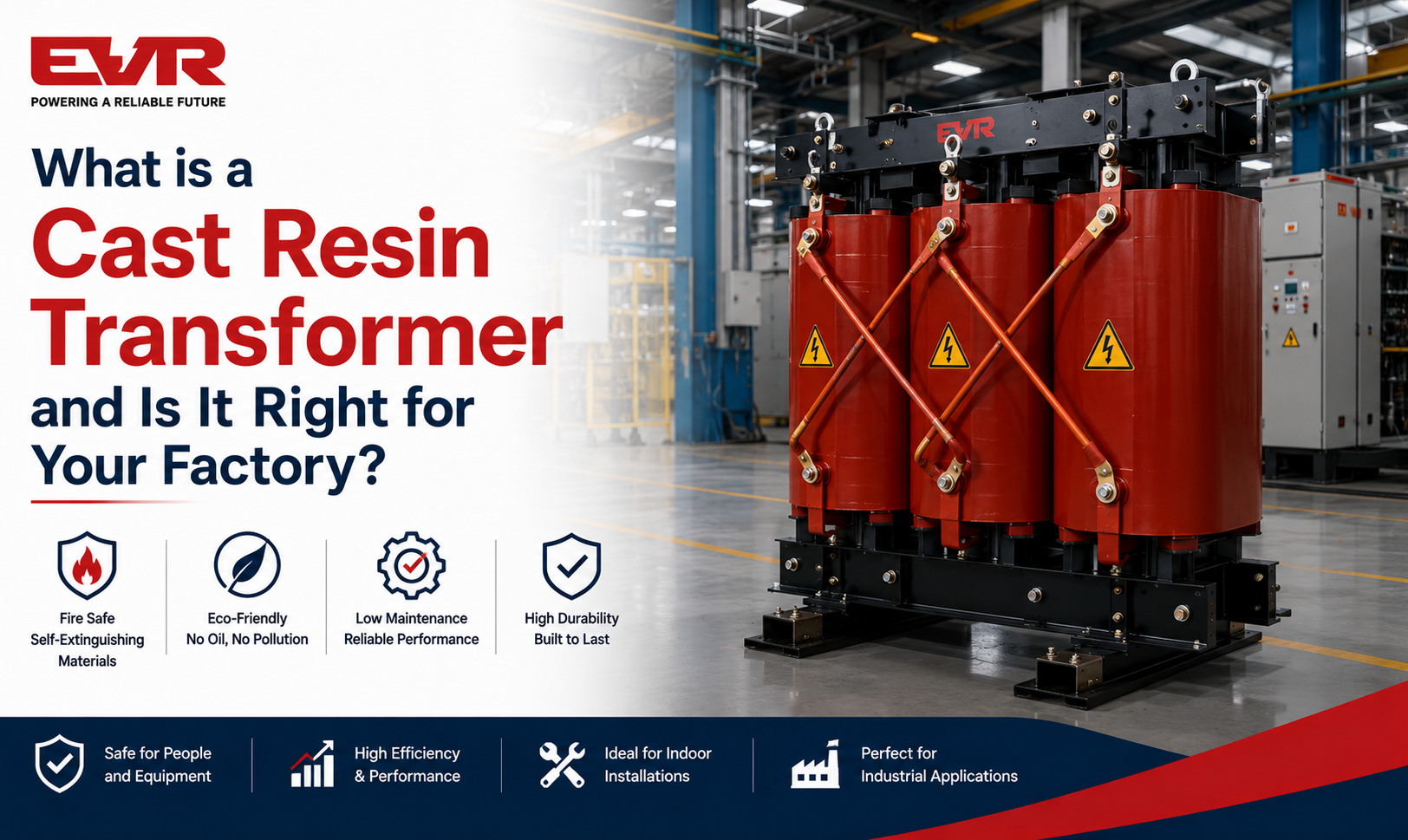
Picture a busy factory floor where every machine depends on a steady, safe power supply. The transformer feeding that floor sits quietly in the background, but the type you choose shapes your fire safety, your maintenance bills, and where you can install it. For indoor and space-limited sites, a cast resin transformer for industrial use has become one of the most popular choices, and this guide explains why, along with how to tell if it is the right fit for your plant.
What is a Cast Resin Transformer?
A cast resin transformer is a dry type transformer whose windings are sealed inside a solid shell of epoxy resin. That resin protects the coils from moisture, dust, and industrial contaminants, and because the design uses no oil, it removes the fire and leakage risks that come with oil-filled units.
The result is a transformer that is flame retardant and self-extinguishing, compact, and largely maintenance-free, able to handle temperature swings and demanding electrical conditions with ease. These qualities are exactly why so many factories now rely on cast resin units for indoor power distribution.
Cast Resin vs Oil-Filled Transformers: What’s the Difference?
In the dry type transformer vs oil type comparison, the difference is simple: an oil-filled transformer uses oil to cool and insulate, while a cast resin transformer uses solid resin and air. That one change decides where and how you can install it.
With no oil inside, a cast resin transformer offers:
- Safe indoor installation, right next to the machines it powers
- No oil pits, containment systems, or leaks to manage
- Quiet, clean operation
- Far less routine maintenance
Oil-filled transformers still suit large outdoor sites with very heavy, continuous loads, where oil cooling handles the demand well. But for most indoor factories, cast resin is the safer, simpler choice. Our guide on oil-cooled versus dry-type transformers covers this in more detail.
The Advantages of a Cast Resin Transformer
The main cast resin transformer advantages come down to safety, low upkeep, and comfort in enclosed spaces:
- Fire safety. The resin is flame retardant and self-extinguishing, with no combustible oil inside, which matters in a building full of staff and equipment.
- Low maintenance. There is no oil to test, top up, or watch for leaks.
- Compact and flexible. Its size allows easy installation even where floor space is tight.
- Strong performance. The design offers high impulse and short-circuit strength with low partial discharge.
- Environmental resistance. It copes well with humidity, dust, and shifting temperatures.
Together these traits make it a dependable indoor transformer for factory use, where safety and reliability come first.
Which Industries Use Cast Resin Transformers?
Cast resin transformers are used wherever fire safety, indoor installation, and clean operation matter most. Common settings include:
- Manufacturing and processing plants
- Chemical, textile, and pharmaceutical units
- Hospitals and data centres
- Commercial complexes and high-rise buildings
- Renewable energy and infrastructure projects
Is a Cast Resin Transformer Right for Your Factory?
Choosing a cast resin transformer comes down to your location, load, and safety priorities. It is an excellent choice when your factory needs indoor installation, has strict fire safety rules, or houses sensitive equipment and staff nearby.
If your site runs very heavy outdoor loads or high vibration, cast resin may not be the perfect match, but that does not rule out EVR Power. As a VPI transformer manufacturer Chennai businesses trust, EVR builds cast resin, VPI, and other dry type transformers for a wide range of settings, so the right solution is always within reach. To find the best fit for your factory, talk to the EVR Power team for a technical assessment of your site.
Power Your Factory Safely with EVR Power Cast Resin Transformers
For most indoor factories, a cast resin transformer for industrial use is the safe, low-maintenance choice. It removes the fire and leakage worries of oil, fits neatly into tight spaces, and handles demanding conditions with ease, which is why it has become a go-to for modern industrial sites.
With over 25 years of experience and ISO 9001:2015 certification, EVR Power designs and builds cast resin and VPI transformers rated up to 3 MVA in the 36 kV class, backed by repairs, spares, and a 24/7 support team across India. Whether you are planning a new installation or upgrading an existing one, get in touch with EVR Power to find the right transformer for your factory.
FAQs
What is a cast resin transformer and how is it different from oil-filled?
A cast resin transformer is a dry type transformer with windings sealed in epoxy resin instead of oil. It removes the fire and leakage risks of oil-filled units, making it safer for indoor use, while oil-filled transformers suit large outdoor loads.
Which industries use cast resin transformers the most?
They are widely used in manufacturing, chemical, textile, and pharmaceutical plants, along with hospitals, data centres, and commercial buildings. Any site needing indoor installation, fire safety, and clean operation tends to prefer them.
Is a cast resin transformer safer for indoor factory installation?
Yes. Because it uses no oil, it is flame retardant and self-extinguishing, with no risk of oil leaks. This makes it a safer choice for enclosed factory areas with staff and sensitive equipment nearby.
Does a cast resin transformer need less maintenance?
Yes. With no oil to test or monitor, maintenance is limited to cleaning, ventilation checks, and connection inspections. Good air flow is important in dusty industrial settings to prevent build-up.
Does EVR Power manufacture cast resin transformers for industrial plants?
Yes. EVR Power designs and manufactures cast resin and VPI dry type transformers for industrial use, rated up to 3 MVA in the 36 kV class.
0 Comments