
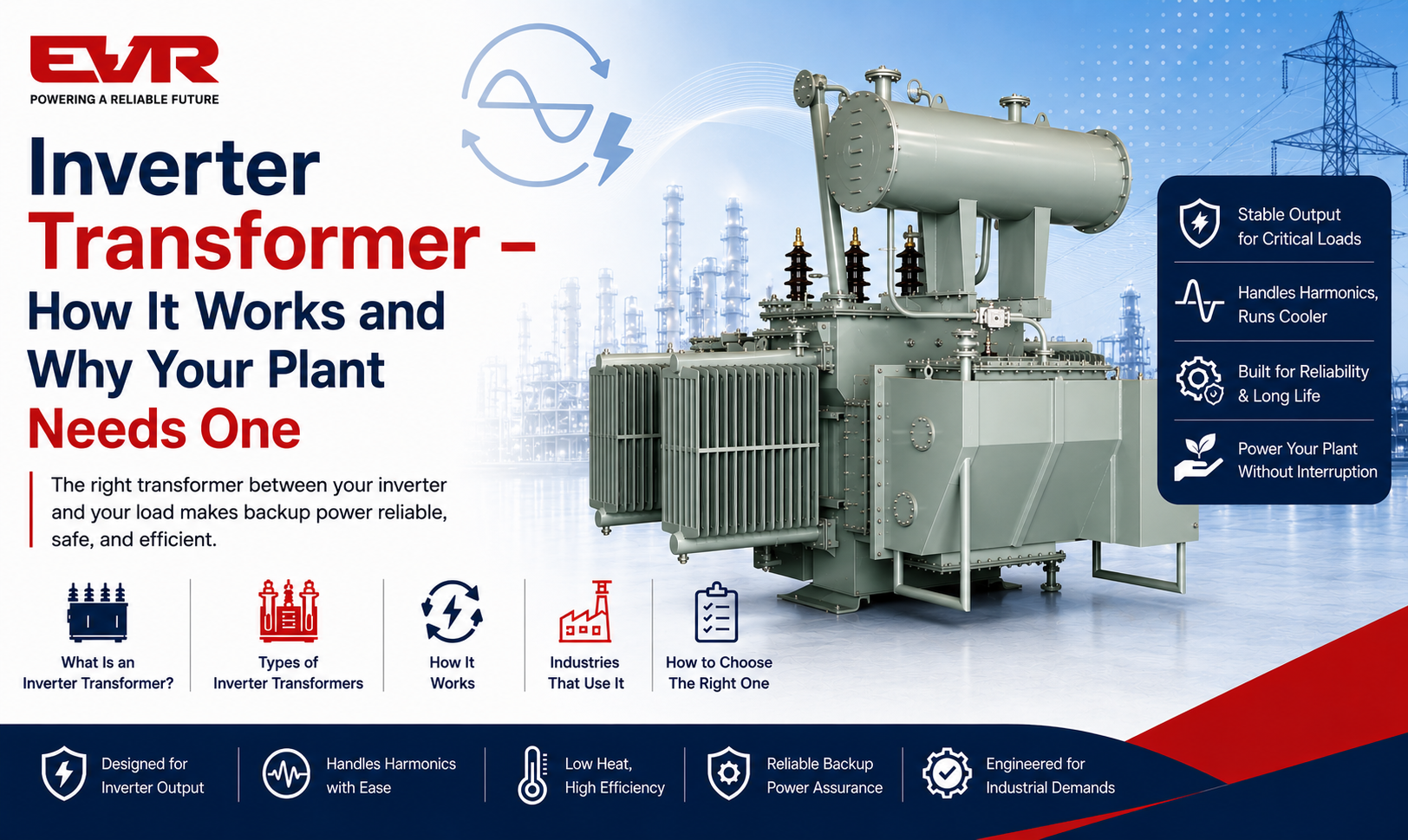
An inverter transformer converts the modified or pure sine wave output from an inverter into a stable voltage suitable for industrial equipment, UPS systems, and solar power setups. Unlike a standard transformer designed for a clean grid sine wave, an inverter duty transformer manufacturer in India typically builds these units to handle non-sinusoidal waveforms without excess heating or efficiency loss.
Facilities relying on backup power during grid outages feel this distinction most. A transformer not designed for inverter output can run hotter, lose efficiency faster, or degrade sooner under harmonic load, issues that often surface only when the backup system is actually needed. Choosing the right inverter transformer from the outset keeps UPS, solar, and backup power paths as reliable as the main grid connection.
What Is an Inverter Transformer?
An inverter transformer is a specialised transformer built to work with the output of an inverter rather than a direct grid supply. Since inverters often produce a modified sine wave (particularly in lower-cost UPS and solar inverter systems), the transformer connected to that output needs a core and winding design that can absorb harmonic content without excessive core loss or overheating.
This makes an inverter transformer for industrial use in India a common requirement wherever backup power, solar integration, or UPS systems are part of the electrical setup, including manufacturing plants, data centres, and telecom infrastructure.
Types of Inverter Transformers
Inverter transformers are generally categorised by application and waveform handling capability:
- UPS inverter transformers – built for the switching frequency and load profile typical of uninterruptible power supply systems.
- Solar inverter transformers – designed to handle output from solar inverters, where load and frequency can vary through the day depending on solar generation.
- Industrial inverter transformers – rated for continuous or heavy-duty backup use in manufacturing and process environments.
How Does an Inverter Transformer Work?
An inverter transformer receives an alternating output from the inverter, typically a modified sine wave or, in higher-end systems, a pure sine wave, and steps it up or down to the voltage level required by the connected load. Because inverter output can carry harmonic distortion absent from a clean grid supply, the transformer core is designed to manage that additional frequency content without a rise in core loss or excess heat.
In setups where harmonic content is a particular concern, pairing the inverter transformer with a harmonic mitigating transformer helps limit distortion passed on to sensitive downstream equipment.
What Industries Use Inverter Transformers?
Inverter transformers are used wherever continuous power or renewable integration is a priority:
- Manufacturing plants running UPS backup for critical machinery and control systems.
- Data centres and telecom facilities, where downtime carries a direct operational cost.
- Solar power installations, where an inverter transformer for solar and power backup connects solar inverter output to plant-level distribution.
- Hospitals and continuous-process industries, where an output transformer for UPS and inverter systems supports equipment that cannot tolerate interruption.
Inverter Transformer vs Standard Transformer – Key Differences
| Parameter | Standard Transformer | Inverter Duty Transformer |
| Waveform handling | Designed for clean sine wave from grid supply | Designed for modified or pure sine wave from inverter output |
| Harmonic tolerance | Limited; not built for high harmonic content | Higher tolerance, reduced core loss under harmonic load |
| Frequency variation | Assumes stable grid frequency | Can accommodate frequency variation from inverter switching |
| Core design | Standard silicon steel core | Often uses core material optimised for harmonic-rich waveforms |
| Typical use | Grid-connected distribution and power supply | UPS, solar, and backup power systems |
How to Select the Right Inverter Transformer
A few factors determine whether a given inverter transformer suits a particular application:
- Load capacity – rated kVA should match the actual load profile of the connected UPS, solar inverter, or backup system, not just peak demand.
- Waveform compatibility – confirming whether the connected inverter produces a modified or pure sine wave, since this affects core and winding design requirements.
- Insulation class and thermal rating – relevant where ambient temperature or duty cycle is high.
- Harmonic performance – particularly important in installations already using variable frequency drives or other harmonic-generating equipment.
- Manufacturer track record – working with an established inverter duty transformer manufacturer in India helps ensure the unit is tested for real-world load and harmonic conditions rather than laboratory-ideal conditions alone.
Where voltage stability is also a concern alongside inverter integration, a servo stabilizer for voltage control is often specified alongside the transformer to manage fluctuations from the grid side.
For plants running a mix of standard grid supply and inverter-based backup, a properly rated power transformer for industrial use alongside the inverter transformer keeps both supply paths operating efficiently.
FAQs
What is the main difference between an inverter transformer and a standard transformer?
A standard transformer is designed for a clean grid sine wave, while an inverter transformer is built to handle the modified or pure sine wave output from an inverter, along with the additional harmonic content that comes with it.
Can an inverter transformer be used for solar power applications?
Yes. Solar inverter systems produce an output similar in profile to UPS inverters, so an inverter transformer rated for solar applications manages that output efficiently while supporting variable generation through the day.
What capacity inverter transformer is required for a factory’s backup system?
Capacity depends on the total connected load during a power outage or backup scenario, not the plant’s full operational load. A load audit is the most reliable way to determine the correct kVA rating.
How long does an inverter transformer last in industrial use?
With proper loading, cooling, and maintenance, an inverter transformer typically has a service life comparable to a standard industrial transformer, often 20 years or more, though harmonic-heavy or continuously overloaded conditions can shorten this.
Does EVR Power manufacture custom inverter transformers for UPS and solar systems?
Yes. EVR Power manufactures inverter transformers built to the load, waveform, and harmonic profile of specific UPS and solar installations rather than offering a single standard design across all applications.
Where to Go From Here
Selecting an inverter transformer comes down to matching its waveform handling, capacity, and harmonic tolerance to the actual backup, UPS, or solar setup it will run against, rather than treating it as interchangeable with a standard grid transformer. For plants working through this decision, it helps to have the specific load profile and inverter type reviewed before finalising a unit. Enquire about inverter transformer specifications to get the right rating and design for a given setup.
0 Comments