
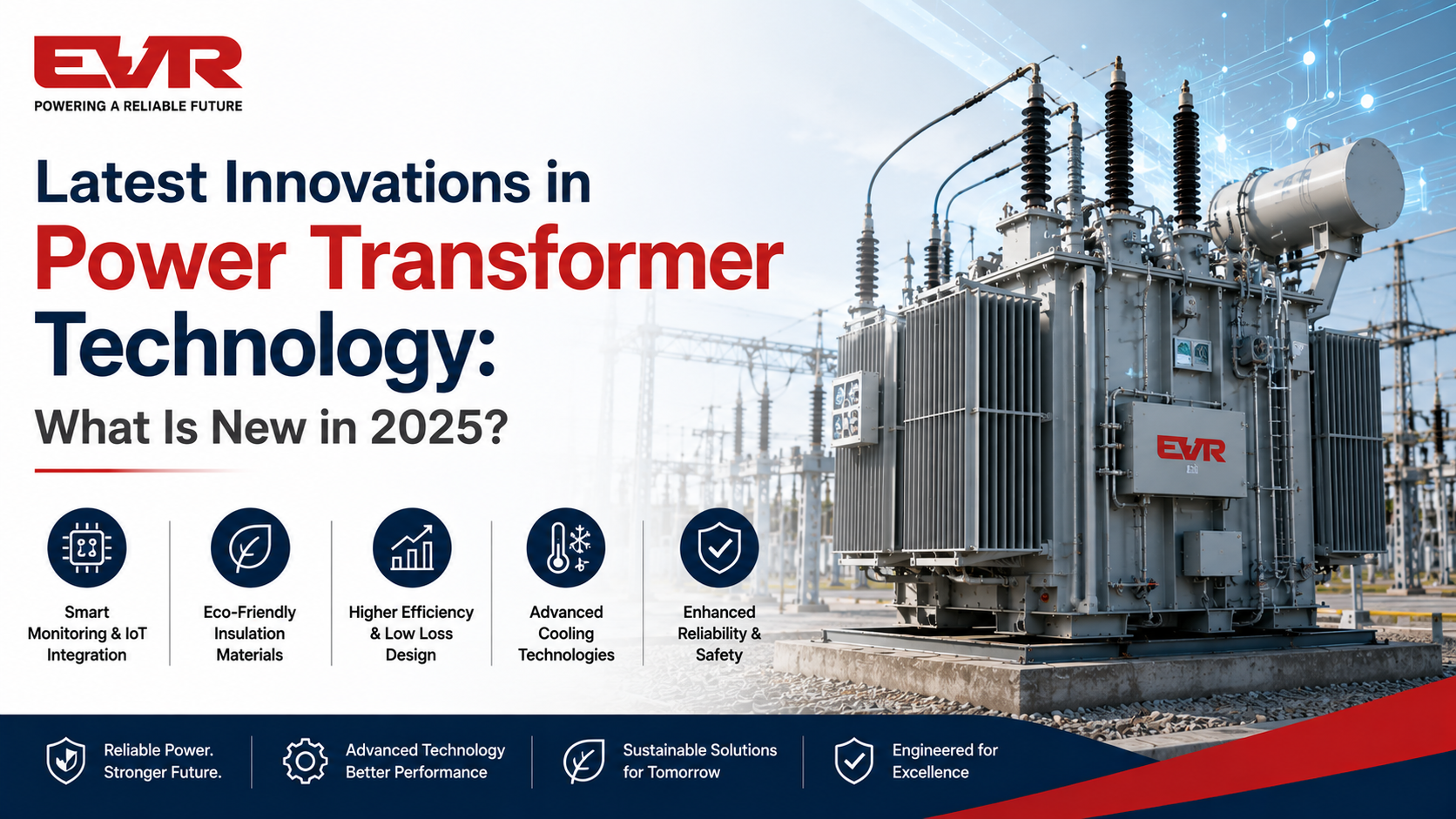
Power transformer technology in India has changed more in the last five years than in the previous two decades. Tighter efficiency mandates, renewable energy integration, and the demand for real-time grid monitoring have pushed manufacturers to move beyond conventional designs.
This guide covers the key developments shaping power transformer technology trends India 2025, what they mean for industrial buyers, and how to assess whether newer technology makes sense for your site.
What Are the Latest Technologies in Modern Power Transformers?
Understanding power transformer technology trends India 2025 starts with four developments that are now entering mainstream procurement:
- Amorphous core designs for lower no-load losses
- IoT-enabled monitoring for real-time diagnostics
- Improved insulation materials for higher temperature ratings
- Eco-friendly cooling fluids replacing conventional mineral oil
Each addresses a specific limitation of conventional transformer design. The sections below explain how each one works and what it means for an industrial buyer in India.
What Is an Amorphous Core Transformer and Is It Better?
An amorphous core transformer India manufacturers are now producing more widely uses an amorphous metal alloy in the core instead of conventional silicon steel laminations.
The difference is in no-load losses. A conventional silicon steel core loses energy continuously through hysteresis and eddy currents, regardless of whether the transformer is carrying a load. Amorphous metal has a disordered atomic structure that reduces these losses by a considerable margin compared to a standard core, typically in the range of 60 to 70 per cent.
For sites that run transformers at low load for extended periods, such as commercial buildings, data centres, and distribution substations, the energy savings over the transformer’s service life can outweigh the higher purchase price. For continuously loaded industrial transformers, the benefit is proportionally smaller.
Amorphous core transformers are heavier and larger than silicon steel equivalents for the same rating, which affects installation in space-constrained sites. They are well suited to distribution uses where no-load loss reduction is the primary objective.
How IoT and Smart Sensors Are Changing Transformer Monitoring
Smart transformer IoT India deployments are growing as utilities and large industrial users look for real-time data from their transformer assets rather than scheduled inspections.
IoT-enabled transformers carry sensors that monitor oil temperature, winding temperature, load current, voltage, partial discharge activity, and dissolved gas levels. The data is transmitted continuously to a monitoring platform, where algorithms flag abnormal readings before they develop into faults.
The practical benefits for an industrial buyer are:
- Early warning of insulation degradation before a failure occurs
- Load monitoring that supports better capacity planning
- Remote diagnostics that reduce the need for site visits
- Maintenance scheduling based on actual condition rather than calendar intervals
Retrofitting sensors onto existing transformers is possible in many cases. For sites looking at monitoring options, EVR Power can advise on the right transformer specification for your requirements.
Are Energy-Efficient Transformers Worth the Higher Upfront Cost?
Energy efficient transformer technology costs more upfront. Whether that cost is recovered depends on three things: load profile, operating hours, and energy tariff.
Two types of loss affect the calculation:
- No-load losses occur whenever the transformer is energised, regardless of demand
- Load losses vary with the current drawn and increase under heavier loads
A site running transformers at partial load for long periods, such as a commercial building or data centre, recovers the cost premium faster than a heavy industrial site running at full load continuously.
In India, the Bureau of Energy Efficiency star rating system for distribution transformers gives buyers a standardised way to compare units. Higher-star units carry lower loss limits and a higher purchase price. Across most sites, the lifecycle saving outweighs the upfront difference when energy tariffs are above a certain level.
Does EVR Power Offer Energy-Efficient Transformer Solutions?
The technologies covered in this guide, lower-loss cores, condition monitoring, and efficiency-rated designs, are not future developments. They are available now, and the right specification depends on your site’s load profile, operating hours, and grid requirements.
EVR Power manufactures power, distribution, cast resin, and harmonic mitigating transformers with reduced power loss as a design priority. With over 25 years of manufacturing experience, ISO 9001:2015 certification, and 24/7 support across India, EVR Power builds each unit to the specification the site requires.
Contact EVR Power for a specification assessment and quote.
FAQs
What are the latest technologies used in modern power transformers?
The main developments are amorphous core designs for lower no-load losses, IoT sensors for real-time condition monitoring, improved insulation materials for higher temperature ratings, and eco-friendly cooling fluids replacing mineral oil.
What is an amorphous core transformer and is it better?
An amorphous core transformer uses an amorphous metal alloy instead of silicon steel in the core, which reduces no-load losses by around 60 to 70 per cent. It suits distribution and low-load sites well but is heavier and larger than a conventional unit of the same rating.
How are IoT and smart sensors used in transformers today?
IoT sensors monitor oil temperature, winding temperature, load current, voltage, partial discharge, and dissolved gas levels in real time. The data enables early fault detection, condition-based maintenance, and remote diagnostics rather than scheduled inspections.
Are energy-efficient transformers worth the higher upfront cost?
For most industrial and commercial sites in India, yes, when lifecycle costs are considered. The savings from reduced losses over the transformer’s service life typically outweighs the higher purchase price, particularly at sites with partial loads and extended operating hours.
Does EVR Power offer energy-efficient or smart transformer solutions?
EVR Power manufactures power, distribution, cast resin, and harmonic mitigating transformers with reduced power loss as a design priority. For site-specific efficiency requirements, contact EVR Power for a specification assessment.
0 Comments