
Have you ever looked at a massive fenced facility filled with towering metal structures, humming transformers, and complex wiring, and wondered how it fits into the broader electrical grid?
The journey of electricity from a remote power generation plant to the lightbulb in your living room or the heavy machinery in an industrial plant is long and complex. Throughout this journey, electricity must be controlled, monitored, and adjusted to ensure it travels efficiently and safely. This is where electrical hubs come into play. For anyone looking to understand the backbone of our modern infrastructure, answering the fundamental question, What is a substation?, is the perfect starting point. These facilities are critical junctions in the power grid, ensuring that electricity is delivered at the correct voltage to the right destination without causing catastrophic system failures.
The Core Concept Behind an Electrical Substation
When delving into the mechanics of electricity distribution, many engineers and students ask, What is a substation in a power system?
The answer is both interesting and technical. However, in simple terms, it refers to an auxiliary station in an electrical power generation, transmission, and distribution network that facilitates the transformation of electrical voltages from high to low, or vice versa, using transformers. There may be several nodes or centres through which the electrical power passes in its journey from the plant to the consumer’s end. By boosting the voltage, it can be transmitted over long distances without much power loss. However, once it enters an inhabited area, the voltage must be reduced to reasonable levels.
As a leading manufacturer in the energy sector, EVR Power continuously provides robust infrastructure to ensure seamless, efficient, and exceptionally safe voltage conversions.
Essential Parts of a Substation Infrastructure
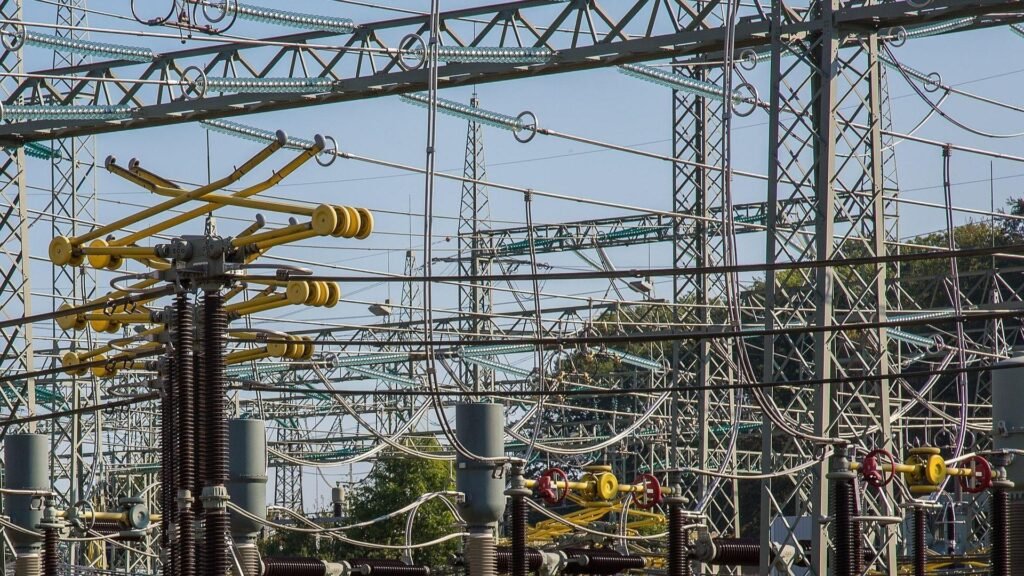
To understand the true nature of these establishments, it is imperative that the internal structure and the various components of an electrical substation be understood, as they all play an integral part in the stability of the entire regional power grid.
- Transformers: These are the primary components of the facility. These are the ones that manage the stepping up or stepping down of the voltage. Good, working power transformers are necessary in order to manage the high loads in the transmission of power and to reduce the amount of energy wasted over long distances.
- Circuit Breakers: These are the automatic safety switches that disconnect the power in the event that there is an indication of a fault or an enormous surge in the power grid.
- Isolators (Disconnect Switches): Unlike circuit breakers, isolators are used for the physical disconnection of any part of the system for maintenance, but they can only be done when the current is switched off.
- Busbars: These are thick, highly conductive metal bars that are used for the transmission of large volumes of electricity and are then distributed to various sections of the system.
- Lightning Arresters: This is because these facilities are located outdoors and are highly sensitive, thus requiring lightning arresters for protection against unpredictable high voltage, especially during severe storms.
When you think about all these highly advanced components working in perfect harmony, the answer to the question, “What is a substation?”, becomes crystal clear. It is not just a single machine but a highly synchronised set of devices that work around the clock.
Categorising a Substation by Function
Because of the size and multipurpose nature of the power grid, these facilities are not built on a one-size-fits-all basis. There are different substation facilities, each built for very specific functions in the grid.
- Step-Up Transmission Substations: These substations are built near the power generation plants, such as hydroelectric dams, coal plants, or solar farms. These substation facilities take the electricity generated in these plants and step up the voltage by a factor of 10 or more. This type of voltage enables the electricity to travel hundreds of miles via the cross-country transmission lines without any significant loss of energy.
- Step-Down Transmission Substations: These substation facilities are built closer to the cities and large industrial centres. They take the extremely high voltage from the transmission lines and reduce it to a safer sub-transmission level.
- Distribution Substations: Facilities located within your city or town. They step the voltage down even further to the standard levels required by commercial buildings and residential homes. Facilities like these rely heavily on top-tier Distribution Transformers like EVR Power’s to safely deliver power directly to the end consumer.
- Switching Substations: Interestingly, these do not contain transformers and do not alter the voltage. Instead, they operate purely as major connection points, routing power to different transmission lines or isolating sections of the grid during maintenance or emergencies.
Exploring these functional differences gives us another perspective on our primary query. If someone asks you, What is a substation? You can now explain that its definition depends on whether it is located at the beginning, middle, or end of an electric circuit.
Categorising a Substation by Design and Architecture
Apart from the role in the grid, the environmental conditions and space constraints play a significant role in the construction of such facilities. The type of substation can also be classified based on architectural designs, enclosures, and insulation media.
- Outdoor Substations: These are the most commonly used substations. They are usually located in fields or on the outskirts of cities. This type of substation makes use of air as the insulation medium. Hence, all the equipment should be kept at a wide interval. Therefore, a very large space is required. These substations are easily upgradable.
- Indoor Substations: In urban cities, where land values are high, substation equipment is kept inside buildings. These buildings should be designed to provide cooling facilities. This type of substation makes use of advanced VPI Transformers due to their high fire safety ratings and low chances of leakage of harmful gases.
- Underground Substations: Taking space conservation to the next level, some of today’s cities have decided to put their electrical substation completely underground. This is extremely complex and expensive to build, requiring phenomenal ventilation and structural engineering, but it completely eliminates the footprint of the substation from being visible.
- Pole-Mounted Substations: These substations are the smallest of all and are usually found in rural or residential areas. The transformer and some minor protective devices are mounted securely onto a strong and robust wooden or concrete utility pole.
Understanding these different types of substation electrical equipment shows how amazingly flexible modern electrical engineering has become. Whether exposed to the harsh desert elements or buried underground, the technology remains consistent and extremely reliable.
Secure the Future of Power Distribution with EVR Power
The global demand for electricity is rising exponentially, driven by industrial automation, electric vehicles, and massive data centres. As a result, the infrastructure that manages our electricity must evolve. Modern hubs are becoming smarter, integrating advanced SCADA (Supervisory Control and Data Acquisition) systems, AI-driven fault detection, and seamless integration of renewable energy sources.
Building a Resilient Future: Trust EVR Power for Industry-Leading Grid Technology
So, ultimately, what is a substation? It is the steadfast, indispensable core of our modern world, quietly powering our lives, safeguarding our electronics, and bridging the gap between raw power generation and everyday utility. Ensuring that these facilities are equipped with the absolute best technology is non-negotiable for the stability of our future. If you are upgrading your grid infrastructure, managing an industrial complex, or designing a new electrical hub, partnering with experienced experts is crucial. Contact us today to discover how our industry-leading transformers and power solutions can optimise your next project.
FAQs
What does the step-up transformer do?
It increases the voltage of the generated electricity, which can then travel long distances with minimum loss of power.
Can the substation operate without the transformer?
Yes, the switching substation can operate without the transformer because its only role is to switch the power lines.
Why are circuit breakers essential in substations?
They are automatic safety switches that can switch off the power supply in case of overload or short circuits to avoid damage to the system.
How can the electrical equipment outside be protected from lightning?
Lightning arresters are used to divert the high voltage of the lightning strikes directly to the ground.
Are the indoor substations safe enough for populated areas?
Yes, they are very safe as they are made of fire-resistant materials such as dry-type transformers and also have good ventilation systems.
0 Comments