
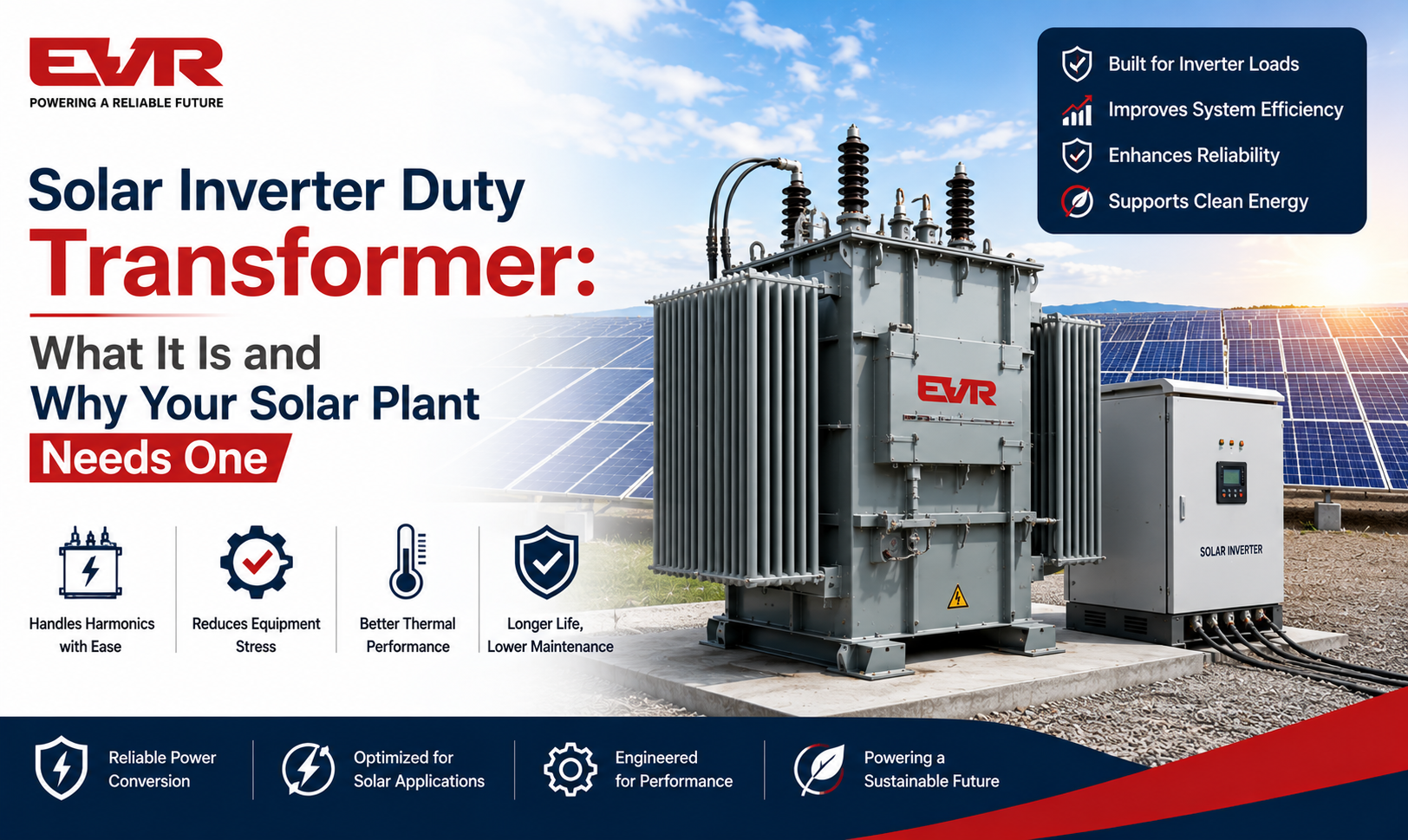
A standard transformer is built for alternating current from the grid. Selecting the right transformer for solar power plant use starts with understanding that difference. A solar plant does not start with alternating current. It starts with direct current from photovoltaic panels, and converting that into grid-compatible power requires a transformer designed for the job.
This specialised transformer handles that conversion correctly. This guide explains what makes it different from a standard transformer, what it does inside a solar plant, and how to choose the right one.
How a Solar Inverter Duty Transformer Works in a Solar Plant
Solar plants in India pair an inverter with a dedicated transformer to handle the full conversion chain. The solar inverter duty transformer India projects rely on takes the AC output from the inverter and steps it up to the voltage the grid requires. EVR Power’s converter and inverter transformer range covers these requirements across solar and wind projects.
The solar inverter first converts the DC output from the panels into AC at a low voltage. The inverter duty transformer then steps that AC voltage up to the level required for grid connection or local distribution. The two components work together as a single power conversion unit, which is why the transformer is specified to match the inverter it is paired with.
Why a Standard Transformer Cannot Be Used in a Solar Plant
A standard transformer is not a direct substitute for an inverter duty unit in a solar plant. The two are built for different electrical conditions.
A conventional transformer is built around the assumption of a steady, uninterrupted AC supply. It expects consistent demand from the load and a reliable grid input. Solar generation provides neither. Output is variable across the day, and it stops entirely at night. Running a standard transformer under those conditions leads to thermal stress, reduced efficiency, and premature failure.
The second problem is harmonics. Solar inverters produce non-sinusoidal waveforms that introduce harmonic distortion into the AC output. Standard transformer cores are not optimised for harmonic-rich environments, which causes additional heat build-up and energy loss. An inverter transformer for solar farm projects is built with a core design and winding configuration that tolerates harmonic loading.
What Capacity Solar Inverter Transformer Does Your Plant Need?
Transformer capacity for a solar plant is determined by the inverter output, not the panel rating. The transformer must match or exceed the maximum AC output of the inverter it serves.
Capacity selection depends on several site-specific factors:
- Expected load variation across the day and season
- Grid connection voltage requirements at the point of interconnection
- Ambient temperature at the installation site, which affects the transformer’s continuous rating
- Cable lengths and associated voltage drop between inverter and transformer
EVR Power’s technical team can advise on the correct specification for your site based on inverter output and grid connection requirements.
How a Solar Inverter Transformer Protects Against DC Injection
Solar inverters can allow small amounts of DC current to appear in the AC output, a condition known as DC injection. DC injection causes core saturation in a transformer, which increases heat, creates noise, and shortens winding life.
A converter transformer for renewable energy plants is designed with a winding configuration and core material that tolerates DC offset without saturating. Some designs use a delta winding on the primary side, which blocks DC from passing through to the grid. This protection is built into the specification and is not available in a standard distribution transformer.
Solar Inverter Duty Transformer India Supply from EVR Power
As a solar transformer manufacturer Chennai project developers and renewable energy firms across India rely on, EVR Power manufactures converter and inverter transformers for solar panels, photovoltaic grids, and windmill power transmission centres. Each unit is built to match the inverter output, grid voltage, and site conditions of the project.
EVR Power holds ISO 9001:2015 certification, has been manufacturing transformers for over 25 years, and provides round-the-clock support across India. Each inverter duty transformer comes with a one-year product warranty.
FAQs
What is a solar inverter duty transformer and how does it work?
A solar inverter duty transformer receives the AC output from a solar inverter and steps it up to the voltage level needed for grid connection or local distribution. It is built to handle variable DC-sourced loads and harmonic distortion that conventional transformers are not rated for.
Why cannot a standard transformer be used in a solar plant?
A conventional transformer is built for a steady, uninterrupted AC supply. Solar generation is variable and introduces harmonic distortion from the inverter. Running a conventional transformer under those conditions causes thermal stress and early failure.
What capacity solar inverter transformer do I need for my plant?
Capacity is determined by the maximum AC output of your inverter, not the panel rating. Site conditions, grid connection voltage, and ambient temperature also affect the specification. Contact EVR Power for the right capacity for your project.
How does a solar inverter transformer protect against DC injection?
Solar inverters can introduce DC into the AC output, causing core saturation in standard transformers. Inverter duty transformers are built with winding configurations and core materials that tolerate this, and some use a delta primary winding to block DC from reaching the grid.
Can EVR Power supply inverter duty transformers for solar and wind farms?
Yes. EVR Power manufactures converter and inverter transformers for solar panels, photovoltaic grids, and windmill power transmission centres across India. Contact EVR Power for a technical assessment and quote based on your inverter output and site conditions.
0 Comments