
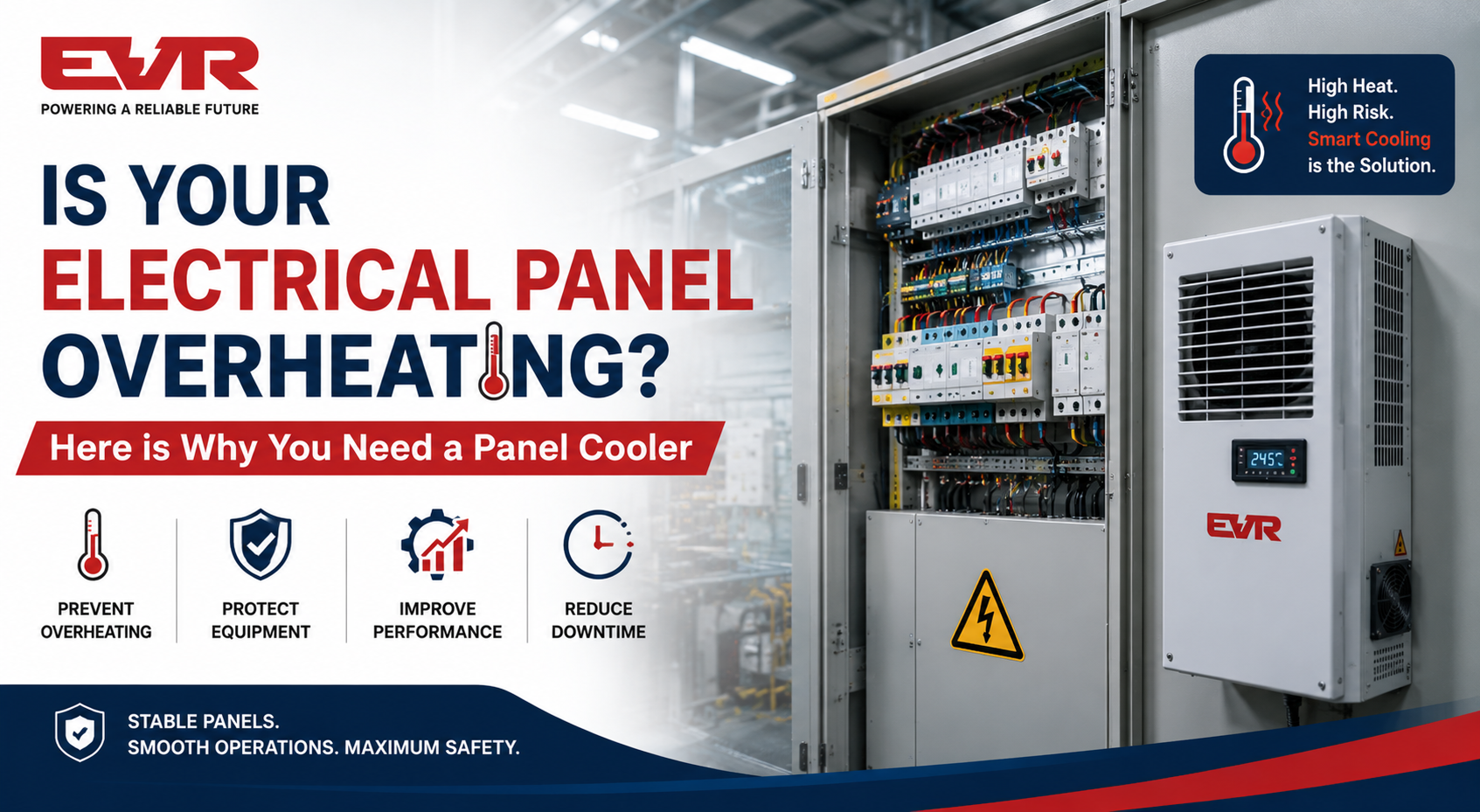
If your electrical control panels are running hot, your production line is running a risk. Overheating inside a control cabinet is not just an inconvenience. It leads to component failure, unplanned downtime, and in serious cases, electrical fires. The problem is more common than most plant managers realise. In most cases, a proper electrical panel cooling solution is all that stands between smooth operation and a costly breakdown.
This blog explains why electrical panels overheat, what happens when they do, and why an electrical panel cooling solution from a trusted panel cooler manufacturer India plants rely on is the most effective answer.
Why Do Electrical Panels Overheat?
Electrical control panels house components that generate heat during normal operation. Variable frequency drives, PLCs, contactors, relays, and power supplies all contribute to the thermal load inside a cabinet. When that heat has nowhere to go, temperatures rise until something fails.
Here are the most common reasons panels overheat.
Poor Ventilation or Sealed Enclosures
Many industrial control panels are sealed to protect against dust, oil mist, and moisture. While this protects the electronics from contamination, it also traps heat inside. Without an active electrical panel cooling solution, the internal temperature climbs steadily with every hour of operation.
High Ambient Factory Temperatures
Factories in South India and other warm regions operate in environments where ambient temperatures regularly exceed 35 to 40 degrees Celsius. Passive ventilation is simply not enough in these conditions. Knowing how to cool electrical panels in factory environments with high ambient temperatures is one of the most common challenges EVR Power helps plant managers solve. [INTERLINK: Link to EVR Power panel cooler product page]
Increased Electrical Load Over Time
As production scales up, more equipment gets added to existing control panels. The panel may not have been designed for the current load, meaning heat generated inside the cabinet has increased well beyond the original design parameters.
Inadequate Maintenance
Dust and debris accumulate inside panels over time, clogging ventilation paths and acting as insulation. This prevents heat from dissipating naturally and accelerates temperature rise inside the enclosure.
What Happens When an Electrical Panel is Not Cooled Properly?
The consequences of inadequate electrical panel cooling are progressive and expensive.
Component Failure
Semiconductors, capacitors, and drive units all have defined temperature limits. Once exceeded consistently, failure becomes inevitable and can shut down an entire production line.
Nuisance Tripping
Thermal protection systems trigger automatic shutdowns when temperatures get too high. This protects components but disrupts production and increases pressure on maintenance teams.
Reduced Equipment Lifespan
Every degree above the rated operating temperature accelerates component ageing. Panels running consistently hot will need replacement well before their expected service life.
Fire Risk
Overheated wiring and components are a documented cause of electrical fires in industrial facilities. Taking steps to prevent electrical panel overheating removes one of the most avoidable risks in your plant. [INTERLINK: Link to EVR Power panel cooler product page]
How a Panel Cooler Works as an Electrical Panel Cooling Solution
A panel cooler for control panels uses compressed air to generate cold air directed into the control cabinet using the Vortex tube principle, which separates compressed air into a hot and cold stream without any moving parts or refrigerants.
The cold air is routed into the panel enclosure, displacing hot air and maintaining safe internal temperatures. The hot air is vented outside the cabinet.
With no moving parts, a panel cooler for control panels requires minimal maintenance. It is compact, easy to retrofit, and needs no refrigerants or electrical connections to operate. A panel cooler for control panels is one of the most practical electrical panel cooling solutions for factories needing reliable thermal management in sealed enclosures. [INTERLINK: Link to EVR Power panel cooler product page]
Industrial Sectors That Rely on Active Panel Cooling
Any industry relying on automated control panels in high-temperature or dusty environments will benefit from an active electrical panel cooling solution.
- Automotive manufacturing plants run complex automation systems continuously. A single panel failure can halt an entire assembly line.
- Textile factories operate large numbers of variable speed drives in hot environments where passive cooling is insufficient.
- Food and beverage processing facilities need panels to operate reliably in warm, humid conditions.
- Cement and mining operations expose panels to extreme dust and heat, making active cooling essential.
- Pharmaceutical plants require precise environmental control, making panel overheating a compliance risk.
In each case, working with a trusted panel cooler manufacturer India operations rely on, and choosing the right panel cooler for control panels, ensures the solution matches the enclosure size, compressed air availability, and ambient conditions.
How to Choose the Right Panel Cooler for Your Plant
Enclosure Size and Heat Load
The right panel cooler for control panels is matched to the internal heat load in watts and the target temperature. A panel cooler manufacturer India teams trust will calculate this before recommending a unit.
Compressed Air Availability
Panel coolers run on compressed air, typically at 5 to 7 bar. Confirm your facility has a reliable supply before specifying a unit.
IP Rating
The unit must match the IP rating of your enclosure. For dusty or wet environments, IP54 or IP55 rated coolers are required. EVR Power will confirm the correct rating for your specific site conditions.
Ease of Installation
A panel cooler for control panels can be retrofitted without major modifications. Maintenance is limited to periodic filter cleaning.
Ambient Temperature Range
Ensure the unit is rated for your facility’s conditions. In South India where temperatures regularly exceed 40 degrees, a high ambient rated unit is essential.
Ready to Protect Your Panels? Talk to EVR Power Today
Electrical panel overheating is preventable. Understanding how to cool electrical panels in factory environments and choosing the right electrical panel cooling solution for your enclosures determines whether your panels stay reliable or become a recurring maintenance burden.
EVR Power manufactures panel coolers across a wide range of sizes and cooling capacities, offering a complete electrical panel cooling solution for facilities across India. As a panel cooler manufacturer India plants rely on, EVR Power helps facilities prevent electrical panel overheating before it becomes a breakdown. Get in touch with EVR Power today.
FAQ
Why does my electrical control panel keep overheating?
Electrical panels overheat when enclosures trap heat, ambient temperatures rise, electrical load increases, or ventilation paths are blocked. An electrical panel cooling solution addresses each of these causes effectively.
What happens if an electrical panel is not properly cooled?
Without proper cooling, panels experience component failure, nuisance tripping, and fire risk. Taking steps to prevent electrical panel overheating protects your equipment and production output.
How does a panel cooler work inside a control cabinet?
A panel cooler for control panels uses the Vortex tube principle to generate cold air from compressed air, maintaining safe cabinet temperatures without any moving parts or refrigerants.
Can a panel cooler reduce electrical panel breakdowns?
Yes. A properly sized electrical panel cooling solution keeps internal temperatures within rated limits, reducing heat-related failures and unplanned shutdowns significantly.
Does EVR Power offer panel coolers for all sizes of control panels?
Yes. As a panel cooler manufacturer India plants trust, EVR Power supplies panel coolers across a wide range of cooling capacities. Contact the team to discuss your requirements.
0 Comments