
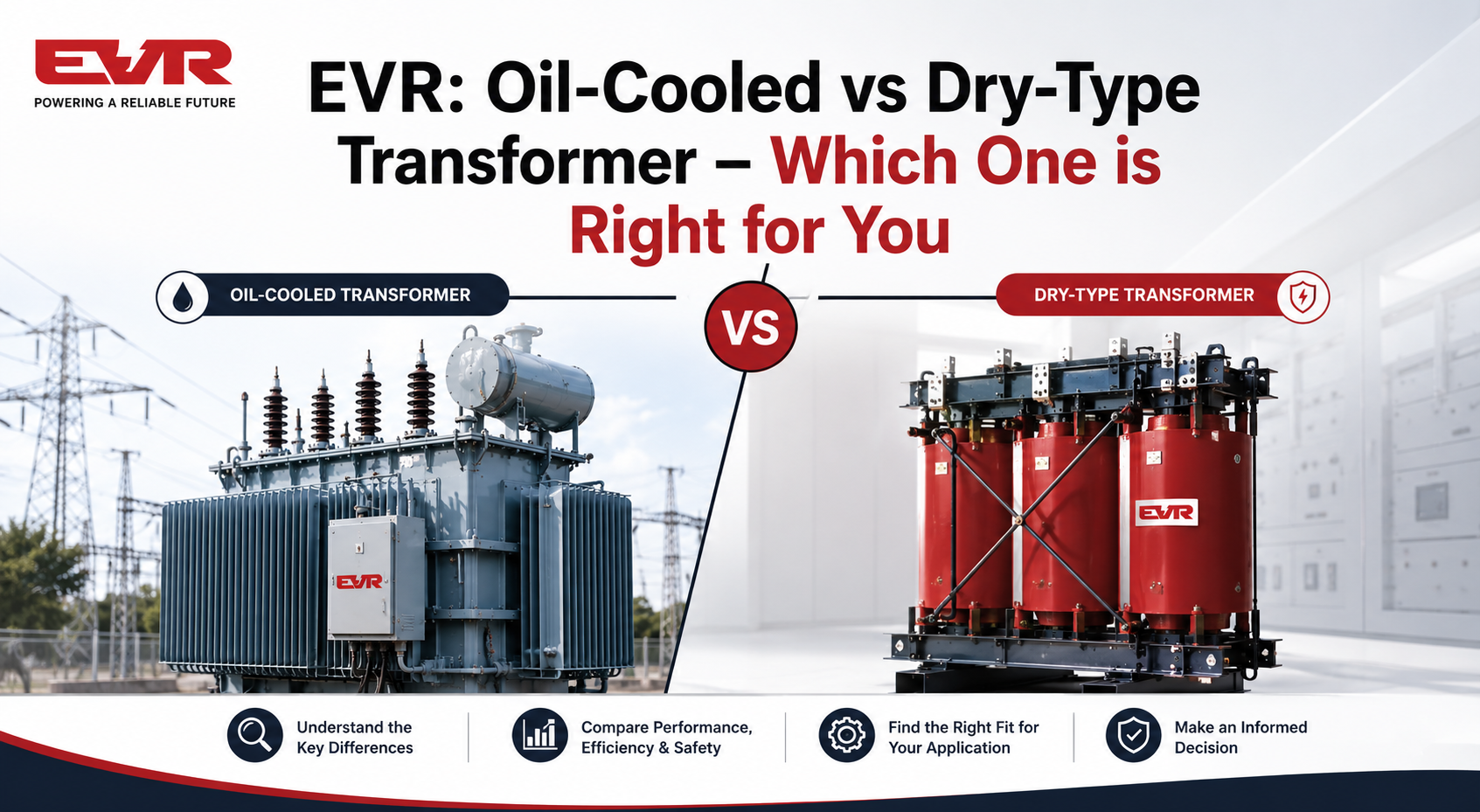
Choosing the right transformer is not only about voltage capacity or installation size. The decision directly affects operational safety, maintenance planning, energy efficiency, and long-term reliability. When businesses compare oil cooled vs dry type transformer options, the selection often depends on where the transformer will be installed and how demanding the operating environment is.
For factories, commercial buildings, processing units, and infrastructure projects, the transformer type must match the site conditions. A dry type transformer for indoor use may suit enclosed facilities with strict fire safety requirements, while an oil filled transformer for industry may perform better in heavy-load outdoor applications.
What Makes Oil-Cooled and Dry-Type Transformers Different?
An oil-cooled transformer uses insulating oil to cool internal components and manage heat generated during operation. It helps to maintain temperature stability during continuous loads.
A dry-type transformer uses air instead of oil for cooling. The windings are insulated using resin or other solid insulation materials, making the unit suitable for enclosed and sensitive environments.
Both types perform the same electrical function, but their design impacts installation, safety, maintenance, and operating conditions.
Why Is an Oil Filled Transformer for Industry Common in Heavy Applications?
Industrial facilities often require transformers that can handle high power demand for long operating hours. Oil-cooled transformers are widely used in such conditions because they offer strong thermal performance and efficient heat dissipation.
How Do Oil-Cooled Transformers Handle High Loads?
Oil transfers heat away from transformer windings more effectively than air. Industries such as manufacturing, mining, utilities, and large infrastructure projects commonly prefer oil-filled transformers because they support:
- Higher voltage applications
- Continuous heavy-duty operation
- Outdoor installations
- Better overload capability
- Longer operational life under demanding conditions
Where Are Oil-Cooled Transformers Usually Installed?
Most oil-cooled transformers are installed outdoors or in dedicated yards. They require adequate spacing, ventilation, and safety measures.
Commonly found in:
- Manufacturing plants
- Power distribution networks
- Steel and cement industries
- Renewable energy projects
- Large warehouses and processing units
Why Is a Dry Type Transformer for Indoor Use Preferred in Buildings?
Dry-type transformers are widely selected for indoor environments where fire safety and air quality are important concerns.
What Makes Dry-Type Transformers Suitable for Indoor Areas?
Since dry-type transformers do not use oil, they eliminate the risk of oil leakage and reduce fire hazards linked to combustible insulating liquids.
They are often installed in:
- Commercial buildings
- Shopping complexes
- Data centers
- Hospitals
- Educational institutions
- Indoor manufacturing units
How Does Indoor Installation Benefit from Dry-Type Designs?
A dry-type transformer for indoor use generally requires less containment infrastructure compared to oil-cooled units. There is no need for oil pits or leakage management systems, which can simplify installation planning.
Their compact structure also supports installation closer to load centers, reducing cable losses and improving distribution efficiency inside buildings.
Which Transformer Is Safe for Factories?
Safety requirements vary depending on factory operations, environmental conditions, and load demands.
When Is a Dry-Type Transformer Safer?
Dry-type transformers are often considered safer for indoor factory installations because they reduce fire risk associated with transformer oil. Facilities with enclosed production areas, worker-intensive operations, or strict fire regulations may benefit from dry-type systems.
Industries handling chemicals, textiles, pharmaceuticals, or electronics frequently choose dry-type transformers for this reason.
When Is an Oil-Cooled Transformer the Better Choice?
For factories with heavy machinery and high energy demand, oil-cooled transformers may still be the better option. Their cooling efficiency supports large loads and continuous operation without overheating concerns.
If installed outdoors with proper safety systems, oil-cooled transformers provide dependable long-term performance for industrial operations.
The answer to which transformer is safe for factories depends on both operational needs and installation conditions rather than one universal solution.
Which Transformer Requires Less Maintenance?
Maintenance differs between the two types.
What Maintenance Does an Oil-Cooled Transformer Need?
Oil-cooled transformers require regular inspection of:
- Oil quality
- Moisture levels
- Cooling systems
- Bushings and seals
- Leakage conditions
Periodic oil testing is important to maintain insulation performance and detect early signs of internal faults.
Are Dry-Type Transformers Easier to Maintain?
Dry-type transformers generally involve lower routine maintenance because they do not contain oil. Maintenance usually includes cleaning, ventilation checks, and inspection of insulation systems.
However, dry-type transformers can be sensitive to dust accumulation and poor ventilation, especially in industrial environments with airborne contaminants.
How Does Efficiency Compare Between Both Transformer Types?
Oil-cooled transformers usually perform better in higher-capacity installations because oil cooling manages heat more effectively during continuous operation. This helps maintain efficiency under heavy loads.
Dry-type transformers are suitable for moderate load conditions and controlled indoor environments. Modern resin-insulated designs also offer strong efficiency levels for commercial and institutional use.
Energy performance should always be evaluated based on operating load, ambient temperature, and installation conditions.
What Should Businesses Consider in a Transformer Type Selection Guide India?
A proper transformer type selection guide India should account for local operating conditions, environmental exposure, and industry-specific requirements.
Which Environmental Conditions Affect Transformer Selection?
Indian industrial environments often involve:
- High ambient temperatures
- Dust exposure
- Humidity variations
- Space limitations
- Voltage fluctuations
Oil-cooled transformers may perform better in large outdoor industrial sites, while dry-type transformers are often preferred for urban infrastructure and indoor commercial projects.
How Important Are Regulations and Safety Standards?
Factories and commercial buildings must comply with electrical safety standards and fire protection requirements. Transformer selection should align with local compliance standards, operational safety goals, and maintenance capabilities.
Working with experienced transformer manufacturers and solution providers helps businesses select systems that match long-term operational needs.
Which Transformer Type Does EVR Power Recommend?
At EVR Power, transformer recommendations are based on application requirements rather than a one-size-fits-all approach. Industrial facilities with heavy operational loads often benefit from oil-cooled transformer systems, while indoor commercial and controlled environments may require dry-type transformer solutions.
The right transformer choice depends on:
- Installation location
- Power demand
- Fire safety priorities
- Maintenance planning
- Environmental conditions
- Future expansion requirements
A detailed technical assessment helps ensure the transformer supports both performance and operational reliability over the long term.
Conclusion
The comparison between oil cooled vs dry type transformer systems comes down to application suitability, safety priorities, and operating conditions. Oil-cooled transformers are commonly chosen for heavy industrial use and outdoor installations because of their thermal efficiency and load-handling capability. Dry-type transformers are often preferred where fire safety, compact installation, and reduced maintenance are important.
Businesses should evaluate load requirements, installation environment, safety regulations, and long-term operating costs before making a decision. Choosing the right transformer type supports better reliability, safer operations, and improved performance.
FAQs
What is the main difference between oil-cooled and dry-type transformers?
Oil-cooled transformers use insulating oil for cooling and heat dissipation, while dry-type transformers use air and solid insulation materials. Their cooling design affects installation location, maintenance, and safety requirements.
Which transformer type is safer for indoor factory installation?
Dry-type are generally preferred for indoor factory installations because they reduce fire risks linked to transformer oil. They are commonly used in enclosed environments with strict safety standards.
Is a dry-type transformer more expensive than an oil-cooled one?
Dry-type transformers often have a higher initial cost, especially for larger capacities. However, installation and maintenance expenses may differ depending on the application and site conditions.
Which type of transformer needs less maintenance?
Dry-type transformers usually require less routine maintenance because they do not involve oil testing or leakage monitoring. Oil-cooled transformers need periodic inspection of oil condition and cooling systems.
Which transformer type does EVR Power recommend for manufacturing plants?
EVR Power recommends transformer solutions based on the operational needs. Heavy industrial plants often use oil-cooled transformers, while indoor production areas may benefit from dry-type systems.
0 Comments